
 others


Why Choose Us
- ⚡Fast 7-day turnaround
- 🎨Free design assistance
- 📦No minimum order quantity
- ♻️Eco-friendly materials available
- ✅100% satisfaction guarantee
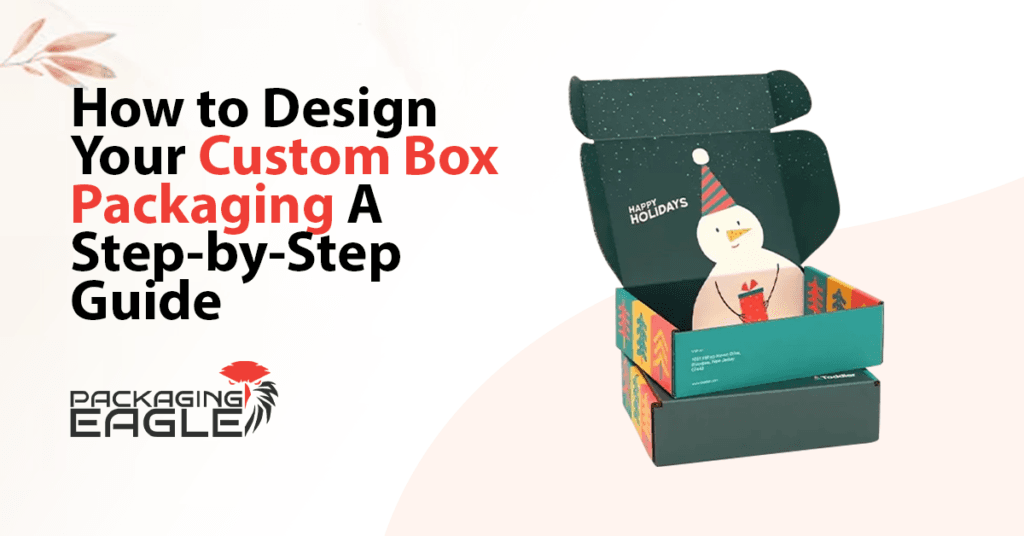
How to Design Your Custom Box Packaging: A Step-by-Step Guide
There are more decisions involved in designing a box for your product than you may think. You must determine the product size you require, the most successful box shape and the materials you’ll use, as well as the design of the printing. Packaging details are vital to get correct before production, otherwise you may have to make changes in the process that cost you more money and run the risk of packaging that doesn’t function the way you expected.
When it comes to how to design custom box packaging, you might just want to take it step-by-step. We’ll start from product measurements, material selection, working up artwork, to getting approval on your final box sample. You can also read how to choose the right packaging for your product before you begin.
Step 1: Understand Your Product and Packaging Needs
First, examine the product to be packed. When you are deciding on the type of box you need, its size, weight, shape and material will help you. A glass bottle requires more protection than a light-weight piece of cloth. A set of custom cosmetic boxes can require individual compartments as well.
Consider the packaging that will be received and utilized by customers. Will the box be on a retail shelf, in a shipping carton, or be shipped directly to customers via e-commerce order?
Also take into account storage, moisture exposure, handling, and the number of products in the box. Record these requirements prior to making design choices. This provides you with a good basis and enables your packaging supplier to suggest appropriate packaging solutions. For more on this, see types of packaging and which one suits your business best.
Step 2: Choose the Right Box Style
The box structure affects the product’s availability, assembly, storage and presentation. Custom Box Packaging comes in a variety of styles, each serving a different purpose.
Think about how the box will be opened, packed and stored before deciding on a box style. The various shapes of boxes can be compared so that you can find a structure that is suitable for your product and sales strategy. Browse all custom box styles.
Step 3: Select the Right Packaging Material
The properties of the material determine the power, weight, printability and price of your packaging. The three popular options are paperboard, greyboard and corrugated board.
Paperboard is good for lightweight products like cosmetics, food, medicines and small retail items. Smooth that can be cut in various folding carton styles. Our custom cardboard boxes are a popular option here.
Corrugated board is made up of flat liner sheets with a fluted layer in between. This construction provides increased strength and cushioning and can be used for shipping, heavier items and items that require extra protection when being handled. When you’re looking for packaging that can be used for frequent shipping, custom corrugated boxes may come into consideration.
Rigid boxes often are made with a core material of greyboard or chipboard. It is thicker than the standard folding carton paperboard and is more rigid. It is covered in decorative or print paper to give a sturdy shape to premium retail products, electronics, and luxury gifts. Explore our custom rigid boxes or read why luxury brands choose collapsible rigid packaging.
Prior to selection, consult your supplier regarding board thickness, strength, surface quality and recycled content. If sustainability matters, check our eco-friendly boxes.
Step 4: Measure Your Product and Set Box Dimensions
It is vital that the measurements are accurate because, even if the box is well designed, if the product is not fitted properly then there will be problems.
Record the length, width and height of the product at its widest dimension. If it is an unusual shape, be sure to include handles, caps, protruding parts, etc., that would influence its size.
Then, determine the amount of space around the product. Allow ample space for protective wrapping, inserts, dividers or cushion materials. But do not put too much space because this may permit the product to slide within the box.
The first thing to check with your supplier is whether they are measuring the inside or outside dimensions of the product. The internal and external dimensions are the required space for your product and the size of the package respectively.
Step 5: Create Your Box Artwork and Branding
After the structure and measurements are agreed to, you can begin the process of visualizing the design. The design of your products’ packaging should include key product information that is easy to find and convey your brand to your customer. Read how custom printed boxes help build your brand identity and why branded packaging matters for more ideas.
Use your brand colors, fonts and logo as your preference. Determine where the logo will be placed and on what panels will the product name, product description, ingredients, instructions, barcode or other information be placed.
Consider where the box will be viewed by customers. The front panel might require the title and logo, the sides and back can contain further information. The inside panels can also be used to print a message or brand graphics.
Your packaging supplier should be able to give you a dieline template of the chosen box style and size. A dieline is a flat design that illustrates the locations of the cuts, folds and glues to be used for the materials. Print your artwork on this template, so that it is placed on the appropriate panel after assembly.
Avoid placing important text and logos near cut lines, folds, and gluing surfaces. It is also essential to add the necessary bleed and safe margins to your design.
Step 6: Pick Printing and Finishing Options
The type of box, number of pieces and detail level of your artwork will determine what printing process you need to use. Digital printing is great for short runs or designs that need frequent changes. Offset printing is best for large print runs, color consistency and sharp images. Flexographic printing is often used for high volume printing and corrugated boxes. Boxes can also be custom printed to give a different surface and look, with matte or gloss lamination, spot UV, embossing or foil stamping. Learn more in our complete guide to digital printing for packaging and CMYK vs. PMS vs. digital printing.
You can also add finishes to alter the surface and look of your custom printed boxes.
- Matte lamination
- Gloss lamination
- Spot UV
- Embossing
- Debossing
- Foil stamping
Step 7: Review a Prototype or Packaging Sample
Request a sample for the entire print run before going any further. A design might appear perfect in the computer but something may go wrong when the design is made with the real material.
Put your product into the sample and see how much space is available. Check the locking points, flaps, and lid and any inserts. Ensure easy opening and closing of the box during normal handling.
Don’t miss the printed information either! Look at the positioning of the logo, spelling, colour, text size and finish. If the packaging is to be moved or sent, check the ability to stack, move, and withstand the conditions of the shipment. Products which are fragile might require extra padding or a sturdier construction.
A sample lets you make sure that you have sizing, artwork and construction errors corrected before the entire order is placed. Be sure to process it thoroughly.
Step 8: Finalise Production Details
After obtaining approval of the sample, verify the other details of your order with your packaging supplier. These include the end count, material grade, box size, printing process, finishes and accepted artwork.
Also discuss the production schedule and delivery requirements. If there is a product launch date or seasonal sales date, give the supplier ample notice of the date and let them know that they must make a plan for that.
A written record of the approved specifications may be kept. This will help to compare the completed order with the requirements and also minimize the risk of misunderstanding during the manufacturing process. See also custom boxes vs. stock boxes to compare costs.
Final Thoughts
The most important step in designing a good custom packaging is considering the product, and then moving to each decision carefully. Consider the box style, material, size and artwork; and review a physical sample before production. If you are in need of assistance with planning your next packaging order, Packaging Eagle can assist you in talking about your requirements and request a custom price quote.
Custom Quote
Ready to Elevate Your Packaging?
Fill out the form — our team responds within 24 hours with a free quote.
Why Choose Us
- ⚡Fast 7-day turnaround
- 🎨Free design assistance
- 📦No minimum order quantity
- ♻️Eco-friendly materials available
- ✅100% satisfaction guarantee
Table of Contents
FAQs
Frequently Asked Questions
Our custom packaging services help your brand stand out with tailored boxes, eco-friendly materials, and high-quality printing. We offer exact sizing, fast production, and distinct finishes to fit your products.
It is important to first measure your product, understand the degree of protection required, determine the box style and determine the appropriate box material.
Determine the length, width and height of the product, and reserve room for inserts, cushioning or protective wrapping.
The artwork will include the logo, colors, text and graphics printed on the box, and the dieline will display the cutting, folding and gluing areas of the box.
Digital printing is appropriate for smaller quantities, offset printing is appropriate for detailed larger runs, and flexographic printing is typically used for corrugated packaging.
Yes. Sample allows you to see the box structure, product fit, closure, print quality and finishing before full order.
How can I order?
The ordering process is as easy as 1-2-3 with us! Directly call us directly or reach us via the quote form. We are available 24/7 to help you through the whole process.
Do you offer eco-friendly materials for these boxes?
We offer recyclable materials for these boxes to make the Earth green and protect its environment.
Can packaging boxes be printed on both sides?
Definitely! We give you full liberty to print the packaging from inside/out or both sides to enhance the visual appeal and give an unforgettable experience while unboxing.
Do you offer these boxes with inserts?
Of course! Get an array of insert options, from foam to cardboard inserts, with us to hold the products in place in the packaging during storage and transit.
Do I get your packaging with free shipping?
We offer free shipping of the ordered packaging all over the USA within the given time frame.
Do you offer free shipping for custom boxes in bulk?
We offer shipping to our valuable clients within the set timeframe without additional cost. Just share the address, and we will handle the rest.
Related Posts