
 others


Why Choose Us
- ⚡Fast 7-day turnaround
- 🎨Free design assistance
- 📦No minimum order quantity
- ♻️Eco-friendly materials available
- ✅100% satisfaction guarantee
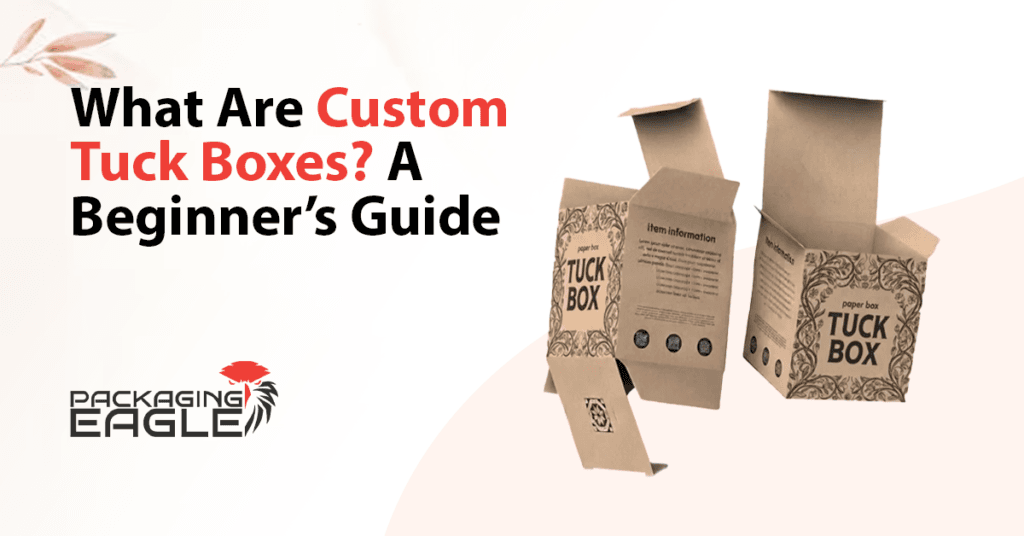
What Are Custom Tuck Boxes? A Beginner’s Guide
Almost everyone has handled a tuck box at some point. They are among the most common box styles used across multiple industries, including beauty, custom cosmetic boxes, and pharmaceuticals. If you are just starting your business, expanding your product line, or looking for new packaging styles, tuck boxes may be a good option for your products.
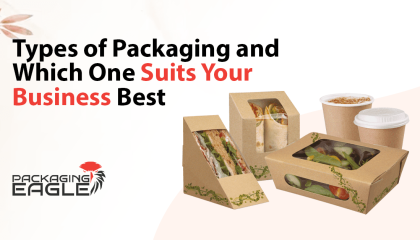
But what are custom tuck boxes, and how do they work? If you are not familiar with this packaging style, read along. This guide covers how tuck boxes work, their common types, and much more. You can also explore the types of packaging and which one suits your business best.
What Are Custom Tuck Boxes?
Custom tuck boxes have a main body with four sides that fold together to make a box. They also have flaps at the top or bottom that tuck in to close the box. One small flap is glued to the side to hold the box together.
Most tuck boxes arrive flat. You fold them into shape, tuck the flaps into place, and add the product. This makes them convenient for businesses that need to store packaging before filling it.
What Are the Different Types of Tuck Boxes?
There are several types of custom tuck boxes. The main difference is how the flaps fold and how the box closes.
1. Straight Tuck End Boxes
Straight tuck end boxes have top and bottom flaps that fold in the same direction. Both flaps are attached to the back panel and tuck toward the front.
This design keeps the main front panel free from a bottom tuck flap. This may be helpful if you have a logo, product image, or product information that you need to have prominent on the front.
Straight tuck end boxes are typically utilized for custom cosmetic boxes, skin care products, small custom retail boxes, and lightweight accessories. They’re a solid choice when the front-facing design is important.
2. Reverse Tuck End Boxes
Reverse tuck end boxes have flaps that fold in opposite directions. The upper flap is connected to the rear panel, and the lower flap to the front panel. These boxes are frequently used for soap, beauty products, small electronics accessories, and other light retail items. If you sell soap bars, see how custom soap sleeves make your soap bars more appealing.
There is a difference between straight tuck boxes and reverse tuck boxes, primarily because of the direction of the flaps and the way the carton is laid out. Both can make a nice package if the size and material are appropriate.
3. Tuck Top Boxes
Tuck top boxes have a top flap which folds to close the box. Depending on the design, the bottom is either tuck closed, snap locked, or automatic locking.
This style can be beneficial for a business that needs to pack its products quickly. The bottom can, for instance, be auto-lock, thus minimizing manual folding when packing.
When the bottom is strong enough to support the weight of a product, tuck top boxes can be used to package custom retail boxes, custom gift packaging, and several heavier items.
What Materials Are Used for Custom Tuck Boxes?
The material influences how the tuck box sets, how it feels in the customer’s hand, and how distinct the printed design looks. Here are the best materials for tuck box packaging.
1. SBS Paperboard
In custom tuck boxes, the type of paperboard commonly used is a smooth, white paperboard called solid bleached sulfate (SBS) paperboard. This material is available in two types: coated on one side (C1S) and coated on both sides (C2S). Either can be used for cosmetics, personal-care products, and other items where printability is important in retail packaging.
2. Kraft Paperboard
A typical kraft paperboard is brown in color, but you can also get it in white and black. Brands with a natural, organic feel can use kraft as their packaging material. You can recycle uncoated kraft, but recyclability depends on other packaging elements like coatings and inks. Read the complete guide to kraft packaging for more details.
3. Corrugated Material
Corrugated is a material with two flat sheets above and below, with wavy, zigzag lines in between. The double layers make it stronger than the others, and the fluted lines offer protection. You can customize the fluted part of the material as per your product weight.
What Products Can Be Packed in Tuck Boxes?
Many industries use tuck boxes, as they can be sized and shaped to fit various products. Even though they cover a wide range of products, that does not mean they suit every situation. Not all products will fit in these boxes. Heavy items, fragile glass items, and moisture-sensitive products may need a more robust board, protective inserts, or a different packaging structure. For glass products, see the best ways to protect glass serum bottles in cosmetic packaging.
- Custom cosmetic boxes and skincare
- Eyelashes and beauty accessories
- Small electronics and accessories
- Custom retail boxes and custom gift packaging
- Pharmaceutical and personal-care products
What Are the Benefits of Custom Tuck Box Packaging?
The benefits of custom tuck box packaging are numerous. This is the reason it is a commonly used box style for multiple products and used in many industries.
- Tuck boxes are flat when not in use and will save space.
- Boxes can easily be assembled by hand using flaps.
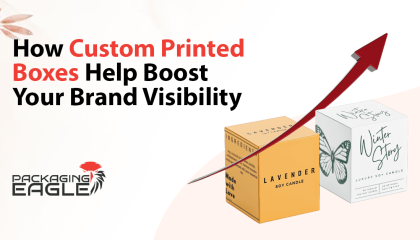
- Printed tuck boxes showcase your brand, colors, and product information. Learn how custom printed boxes help build your brand identity.
- Custom sizes ensure products fit snugly to minimize wasted space.
- Printed designs provide products with a neat and uniform retail appearance.
- Lightweight paperboard helps keep packaging costs down.
How to Customize Your Tuck Boxes
When designing custom tuck boxes for small businesses, the first stage is to start with the product. The design should suit the product and be effective for packing, storage, and use.
- Confirm the dimensions. Measure the length, height, and width of your product. This ensures the proper custom sizing so the product fits in the box and does not move around.
- Select the style of closure. Straight tuck end boxes are good when you want both flaps to close in the same direction. Reverse tuck end boxes use opposite flap directions. If easy assembly or a more secure base is desired, a tuck top with an auto-lock bottom might be better.
- Select your print and colors. Print your logo, tagline, and visuals on your box. Make sure the design is clear and the text is easy to read for customers. Compare CMYK vs PMS vs digital printing for custom boxes to pick the right method.
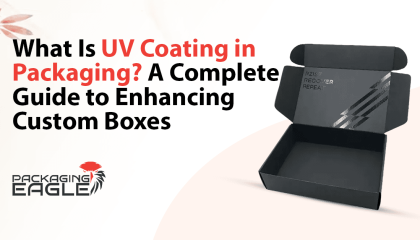
- Consider the finish. There are different coatings like matte, gloss, and others. Each of them serves a different look and purpose. You can also choose from aesthetic finishes like embossing and debossing. Here is a complete guide on UV coating in packaging.
How to Choose the Right Tuck Box for Your Product
Consider how the box is going to be used before ordering. With a few simple checks, you can prevent some common packaging issues.
- Choose a box size that suits your product: not too big, and not so small that the product has to be squeezed in.
- If necessary, add inserts or wrapping to the product for additional protection, and consider the weight of the product.
- Choose a box design that presents your product name, logo, and other information prominently at the point of sale.
- Choose a closure that is simple to put together and meets your practical day-to-day packing requirements.
- Compare materials, prints, and finishes to find a box that fits your budget.
Custom Tuck Boxes for Your Business
For small businesses, startups, eCommerce companies, and product manufacturers looking for practical packaging solutions for light products, custom tuck boxes can be an excellent option. They come in various materials and sizes, can be printed, and are easy to store and easy to assemble.
Packaging Eagle offers custom tuck boxes for custom retail boxes and product packaging. When selecting a style, take into account the size, weight, and packaging costs of your product and the conveyance method you will use to get it to customers. These will help you choose the carton that suits your business.
Custom Quote
Ready to Elevate Your Packaging?
Fill out the form — our team responds within 24 hours with a free quote.
Why Choose Us
- ⚡Fast 7-day turnaround
- 🎨Free design assistance
- 📦No minimum order quantity
- ♻️Eco-friendly materials available
- ✅100% satisfaction guarantee
Table of Contents
FAQs
Frequently Asked Questions
Our custom packaging services help your brand stand out with tailored boxes, eco-friendly materials, and high-quality printing. We offer exact sizing, fast production, and distinct finishes to fit your products.
How can I order?
The ordering process is as easy as 1-2-3 with us! Directly call us directly or reach us via the quote form. We are available 24/7 to help you through the whole process.
Do you offer eco-friendly materials for these boxes?
We offer recyclable materials for these boxes to make the Earth green and protect its environment.
Can packaging boxes be printed on both sides?
Definitely! We give you full liberty to print the packaging from inside/out or both sides to enhance the visual appeal and give an unforgettable experience while unboxing.
Do you offer these boxes with inserts?
Of course! Get an array of insert options, from foam to cardboard inserts, with us to hold the products in place in the packaging during storage and transit.
Do I get your packaging with free shipping?
We offer free shipping of the ordered packaging all over the USA within the given time frame.
Do you offer free shipping for custom boxes in bulk?
We offer shipping to our valuable clients within the set timeframe without additional cost. Just share the address, and we will handle the rest.
Related Posts